

 Back to content
Good supplier data matters because it enables confident decisions, reduces blind spots and prevents risks from going unnoticed. In supplier risk management, the idea that something is better than nothing is rarely true.
Incomplete, inconsistent or inaccurate data doesn’t just reduce visibility - it increases risk. It can create unmanaged vulnerabilities, lead to false confidence, delay remediation, cause regulatory exposure, and ultimately impact continuity and service delivery.
What Does ‘Good’ Supplier Data Actually Look Like?
Getting necessary, accurate and consistent supplier data is essential for confidence in your supply chain.
BEGIN_INTRO
Getting necessary, accurate and consistent supplier data is essential for confidence in your supply chain.

Accurate, complete and up to date supplier data is the foundation of strong supply chain resilience. For CISOs, DPOs and TPRM teams, having the right information and being able to use it effectively is essential for managing cyber, operational and regulatory risk.
Why Does Good Supplier Data Matter?
What Makes Supplier Data Good?
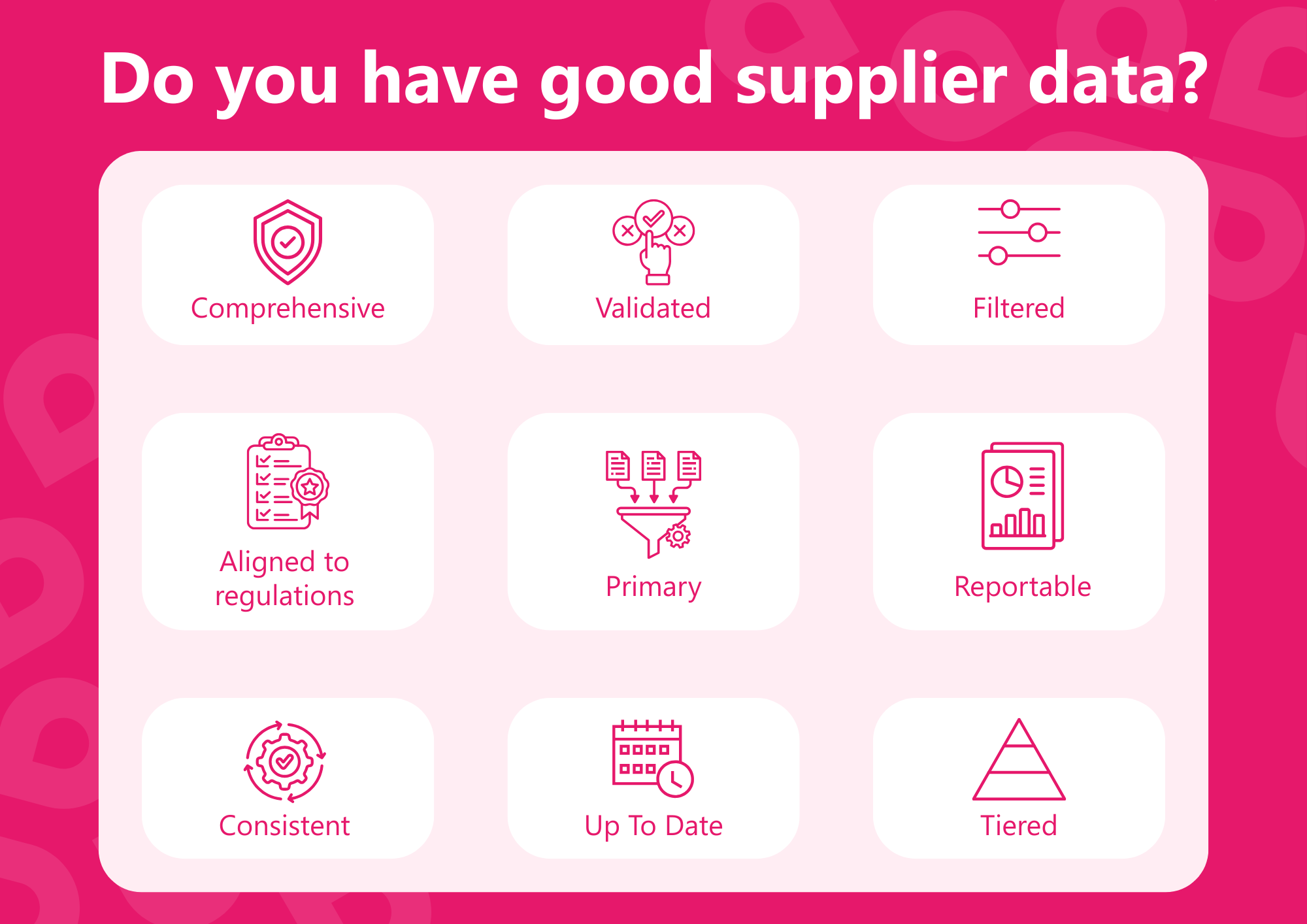
Good supplier data is complete, aligned to standards and immediately usable. These three attributes form the gold standard.
1. Is Your Supplier Data Complete?
Complete supplier data captures every relevant risk area without gaps. When suppliers provide only selective information, organisations lose crucial context.
Good supplier data should consistently cover:
-
Cyber security controls
-
Operational resilience
-
Financial stability
-
Legal and regulatory compliance
-
ESG and ethical practices
-
Insurance, governance and dependency mapping
A full and consistent dataset reduces uncertainty and strengthens oversight.
2. Is Your Supplier Data Aligned With Regulations And Standards?
Supplier data must be grounded in recognised frameworks to be meaningful and comparable.
This includes requirements from:
-
NIST 2
-
Consumer Duty
-
Cyber Essentials Plus
-
ISO 27001
-
SOC reports
Using certifications and standards as the structure for your question set reduces duplication, improves comparability and ensures alignment with regulatory expectations.
3. Is Your Supplier Data Actionable?
Actionable supplier data clearly informs next steps such as onboarding, escalating or approving.
Actionable data must be structured, comparable, consistent and context rich.
This type of data speeds up onboarding, reduces friction and supports clear communication across cyber, procurement, risk and operational teams.
FSQS is designed to provide this level of data quality.
The FSQS questionnaire is developed by buyers and reviewed in line with regulations. It provides a single, consistent view of supplier information with ready to use outputs across teams.
Is Your Supplier Data Accurate?
Even the right questions lead to the wrong conclusions if the answers are inaccurate. Accuracy determines whether your supplier risk picture reflects reality.
Primary Data
Accuracy begins with proximity to the source. The fewer intermediaries between the supplier and the information you receive, the more reliable your view becomes. Direct first party information reflects the supplier’s true position.
Validated Data
Accurate data must also be verified.
Validation includes checking a supplier’s legal and organisational details, reviewing their policy evidence, confirming the authenticity of their certifications, and verifying all document dates and expiry information.
Validation ensures credibility and avoids incorrect assumptions.
Up to Date Data
Supplier data expires. Policies change, controls evolve and organisational structures shift. Out of date information creates false assurance and introduces hidden risk.
FSQS combines supplier support with dedicated validation
Teams assist suppliers with providing the correct documents and evidence. All submissions are reviewed so buyers can trust the accuracy and freshness of the data.
Are You Fully Utilising Your Supplier Data?
Supplier data delivers real value only when teams across the organisation can interpret and apply it consistently.
Tiering and Risk Appetite
Supplier tiering allows organisations to segment vendors by criticality. Your internal risk appetite then determines what is acceptable and what requires attention. Together, these help CISOs, CPOs and CSOs prioritise high impact suppliers.
Filtering for Focus
Different departments have different needs. Filtering ensures each team views the information that matters to them without unnecessary detail.
Ready Made Reporting
Boards, regulators and leadership teams require structured, accurate reporting. Good supplier data includes outputs that are tailored to:
-
Operational resilience
-
Compliance
-
Regulatory submissions
This reduces administration, removes bottlenecks and speeds up decision making.
FSQS Buyers can filter, tier and create bespoke reports by department, supplier tier or regulatory framework such as NIST 2 or DORA.
How Do You Get Good Supplier Data Efficiently?
Collecting supplier data directly can be slow and resource intensive. Teams often spend hours, chasing suppliers, verifying evidence aligning formats. This manual effort drains time that should be spent assessing cyber and operational risk. For most organisations, this becomes a major barrier to achieving high quality oversight.
What Is FSQS And How Does It Help?
FSQS is a community-based supplier assurance model used across the financial sector. Buyers collaborate to define a single, comprehensive question set covering:
-
Cyber risk
-
TPRM
-
Operational resilience
FSQS delivers supplier data that is complete and comprehensive, consistent in format, accurate through validation, comparable across suppliers, continually refreshed, and ready to use for onboarding, monitoring and reporting.
It removes duplication, reduces supplier fatigue, and provides a reliable data foundation for confident, compliant decision-making.
Conclusion
Good supplier data isn’t just “nice to have”, it’s the foundation of effective supplier oversight. Actionable, accurate and utilised to the fullest extent gives teams the confidence to move quickly, identify risk early and work constructively with suppliers to close gaps.
Good supplier data removes doubt. FSQS removes the barriers to getting it.
Want to make supplier oversight faster, simpler, and more consistent?
Download the guide to see how leading CISOs are setting clear data expectations.